
How Does Non-Ablative Work?
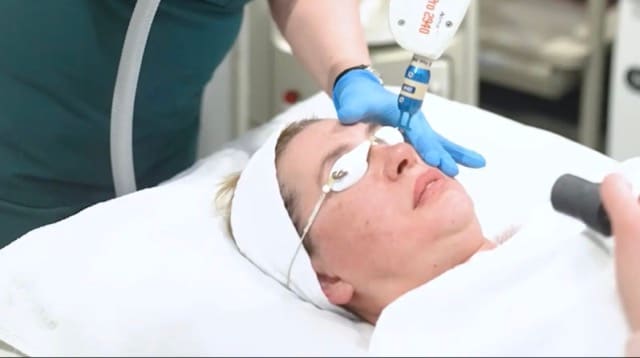
The Pixel®’s 2940nm Er:YAG ablative laser is delivered to the skin through a microoptical lens. This creates 49 (7×7) or 81 (9×9) pixel-sized ablation dots on the skin within an 11mm x 11mm treatment zone, which each penetrate between 20 and 50 microns deep (a micron is one millionth of a metre). The practitioner can decide between the 49 and 81 pixel configuration, depending on the area and type of treatment required. With the smaller 49 dot pattern, the energy is split between fewer pixels, so each pixel receives more energy and the depth of penetration is higher than with the 81 dot pattern. Unlike traditional ablative laser resurfacing, which removes the whole of the top layer of skin in the targeted treatment area, this fractional method damages only certain zones within the selected target area (producing tiny white dots or pixel-like treated areas on the skin), leaving the other zones within it perfectly intact. Therefore, we only treat approximately 20% of the skin within the treatment area. This allows the skin to heal much faster than if the whole area were treated, as the ‘healthy’ untreated tissue surrounding the treated zones helps to fill in the damaged area with new cells. This causes collagen remodelling, skin tightening and an improvement in skin texture as the area heals. Unlike some other fractional laser skin resurfacing machines used in some clinics, the Pixel® 2940 device doesn’t require single patient disposables such as treatment tips, optical dyes, and gels, which helps to make the treatment both faster and cheaper for the practitioner and client. A treatment session for a full face in our laser clinic in Richmond will take approximately 15 minutes, with hands taking approximately 10 minutes.